The Room Before the Roar: How to Spot Dorset’s Next Big Act in a Village Hall

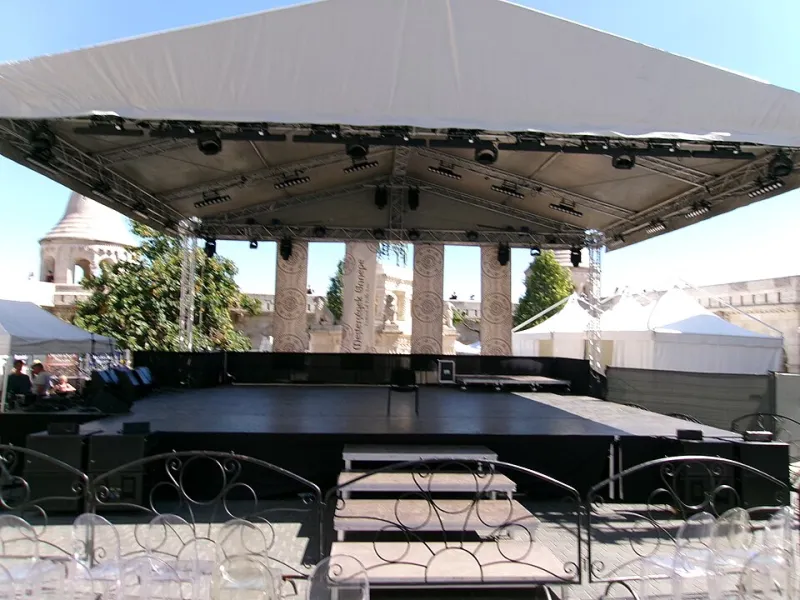
Photo: Vyacheslav Kirillin, CC BY-SA 4.0, via Wikimedia Commons
Some of Dorset's best festival sets do not come with a barrier, a lighting rig or a screen showing the singer's eyebrow. They come with a stack of folding chairs, an urn, a handwritten sign for the loos and a room that smells faintly of floor polish. The village hall circuit is where a lot of local performers learn their trade, and where audiences get the rare pleasure of seeing someone before everyone else does.
That is not a sentimental claim. It is a practical one. A room with sixty or eighty people is an honest teacher. There is nowhere to hide behind a wall of sound. The songs have to work, the between-song chat has to land, and the audience has to be won by the second verse.
Why the small room is the real test
At a big festival, a rising act can get away with a lot: a big PA, a lighting change, a crowd already warmed up by three other bands. In a village hall, the same act has to deal with a tea hatch, a squeaky door and someone's uncle asking loudly whether there is a raffle. That is not a disadvantage for the audience. It is the point.
You hear the actual voice. You notice whether the guitarist can keep time without a click track. You can tell whether the performer is playing to the room or merely performing at it. The best acts make the hall feel bigger than it is; the weaker ones make it feel like a waiting room.
How to spot a promising act early
Start with the billing, but do not stop there. Opening slots at small community festivals are often given to local musicians, youth groups or someone the organiser saw at a pub gig. That is a useful signal, not a guarantee. Look at where else they are playing: a support slot at a Bridport venue, a church acoustic night, a Saturday morning set at a farmers' market. A trail of small, real gigs is often more telling than a polished social media clip.
Listen for timing. A good performer can hold a room through a quiet song, not just a loud one. Watch how they handle a mistake. Do they laugh, reset and carry on, or do they lose the thread? Watch the audience too. Are people leaning forward? Are they putting down their phones? Is there a hush before the last verse? Those are better reviews than any online rating.
Ask the volunteers who booked them. Village hall organisers are usually enthusiastic and specific. They will tell you who was easy to work with, who brought a crowd, who sounded good without a big PA. That is invaluable local knowledge, and it is rarely written down anywhere.
What to listen for in a room of eighty
In a low-capacity show, listen to the dynamics first. Can the act move from a whisper to a full sound without the PA doing all the work? Then listen to the words. In a big field, lyrics can get lost; in a hall, they are often the main event. Notice whether the songs sound finished or whether they still feel like sketches.
Pay attention to the between-song talk. A confident performer does not need a scripted anecdote for every tune. A short, genuine introduction is worth more than a rehearsed monologue. And watch how they treat the room. Do they thank the volunteers, the cake stall and the people who put the chairs out? That is not just good manners; it is a sign they understand the circuit they are playing.
Why the small set sticks
The set you remember is not always the best one technically. It is the one where you were close enough to see the performer's hands, where the room went quiet for the right reason, where you turned to a stranger and said, they are going to be good. That is the brag. Not because you predicted a chart career, but because you were present at the point when a song worked and a room noticed.
In 2026, Dorset's community festival circuit is still the best value in local music. Tickets are often modest, the halls are accessible in ways that muddy fields are not, and the line-ups are put together by people who actually live in the area. The trade-off is that you have to pay attention. There is no giant screen telling you when to cheer.
So arrive early. Park considerately. Bring cash for the raffle. Sit near enough to hear but not so near that you become part of the act. Stay for the last set, even if the last set starts at a time that would normally be your tea. The headline might be on another stage, but the story you tell on Monday could come from a room with fewer than eighty chairs.