Sit Down and Be Counted: What a Dorset Festival’s Chairs Say About Its Crowd
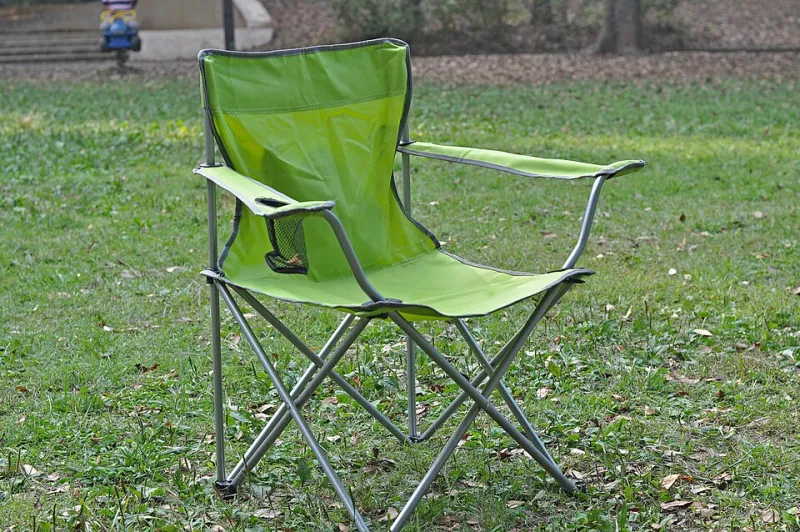
Photo: Ocdp, CC0, via Wikimedia Commons
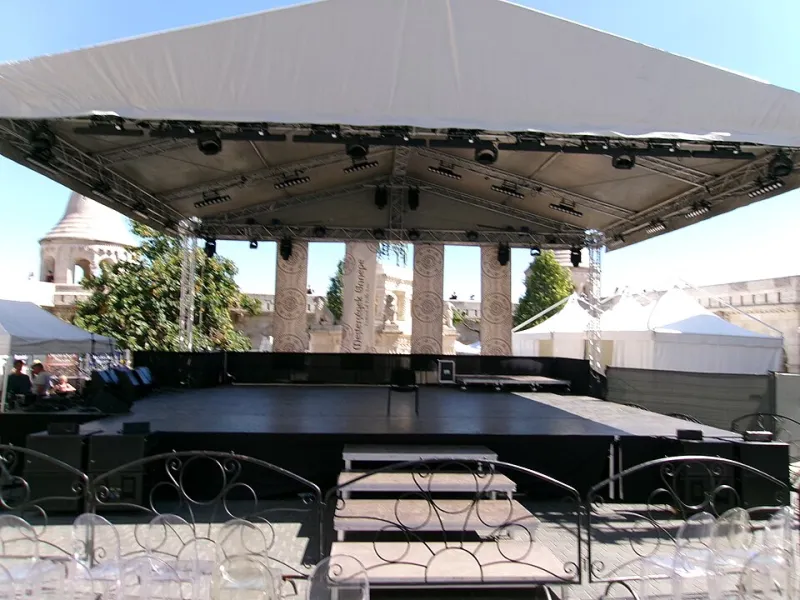
At 9.07am on a Saturday in a Dorset field, something quietly political happens. A row of folding chairs appears along the front of the stage. No announcement, no steward’s briefing, no ceremony. Just a low fence of nylon and aluminium that says: we are here, we have claimed a view, and we would like to sit down before the first act. It is easy to laugh at the chair wall. It is harder to ignore what it tells you about the weekend ahead.
The 9am Chair Wall
You will see it at folk weekends, family festivals and any Dorset event where the average age creeps above 35. By mid-morning, a neat line of camping chairs has taken root at the barrier. Some have cup holders. One has a small flag. Another has a Labrador attached to it. The chair wall is not evil. It is a negotiation between people who want to see the stage and people who want to be comfortable while doing so.
The etiquette is simple, even if nobody prints it on a sign. Keep the chair low-backed if you are anywhere near the front. Do not tie your chair to the fencing, because stewards will have to untie it and they will not be gentle. Leave a gap so latecomers can squeeze in. And if you are able-bodied and plan to stand at the front all day, do not build a wall of empty chairs at 9am and then disappear until teatime. That is not reserving a spot. That is squatting.
At a dance-heavy festival, the chair wall is sparse. At a folk or family weekend, it is a small suburb with a waiting list. Read the room before you unfold anything.
Blanket vs Chair: A Turf War With Tea
Blankets are older technology. They signal picnics, children, low expectations of comfort and a willingness to sit on damp grass. Chairs signal ownership. Blanket people spread. Chair people stack. The trouble starts when a groundsheet creeps into a walkway or a chair blocks a sightline that someone paid good money to enjoy.
The best seating cultures have invisible rules. Blankets go at the back or to the sides. Chairs stay low in the arena and high only at the campsite. Walkways stay clear, even if that means moving your picnic two feet to the left. If you are on a blanket, do not expand like a rising tide. If you are in a chair, do not recline into someone’s knees. And if you are in a chair with a blanket over your legs, you are basically a one-person turf war. Choose a side.
What the Seating Says About the Crowd
A festival’s seating is a census. A family festival has cup holders, picnic rugs, buggies and at least one chair with a sun canopy. A folk festival has wooden stools, canvas chairs and a shooting stick or two. An electronic weekend has almost no chairs in the arena, because nobody sits down and the chairs are all back at the tent, holding a damp towel.
The chair wall also tells you how the festival sees itself. A small Dorset event with a polite chair wall is usually a festival that expects people to stay for the day, eat something, listen to three acts and drive home before midnight. A festival with no chairs and no blankets is telling you something too: this is a standing weekend, and your knees are your problem.
The Accessibility Test
The real test of any festival’s seating culture is not the front row. It is the accessible viewing area. Good ones have level ground, a clear route, companion seats, shade and a steward who knows what they are doing. Bad ones are an afterthought behind a generator, reachable only by a muddy slope and a hopeful attitude.
Accessible viewing platforms are not VIP areas. They are equal access. If you do not need them, do not use them as a shortcut to a better view. If you do need them, ask the stewards rather than guessing. In 2026, more Dorset festivals are publishing seating and access maps before the event, which is a small but genuinely useful step forward. A wheelchair user should not have to ask five people to move before they can see the stage.
A Few Field Rules
- Take a low-backed chair for the arena and a high-backed one for the campsite. They are not the same job.
- Write your name on your chair. Chairs wander, especially after dark.
- Do not leave chairs overnight to reserve space. Stewards will move them, and the field will not care about your outrage.
- Take it home. A broken chair is not compost, and it is not the next person’s problem.
- In wind, fold it. An open camping chair is a kite with a bad attitude.
- If you can stand, do not build a front-row wall at a small stage. Leave the view for someone who cannot.
The folding chair is not the problem. The problem is the assumption that space is yours because you placed a thing on it. A good Dorset festival weekend is a series of small concessions: shift your chair left, fold the blanket, let the child through, leave the walkway clear. The chair is the message. Sit down and be counted, but leave room for someone else to stand.