The Unglamorous Hour: Why Dorset Festivals Are Won Between Three and Five
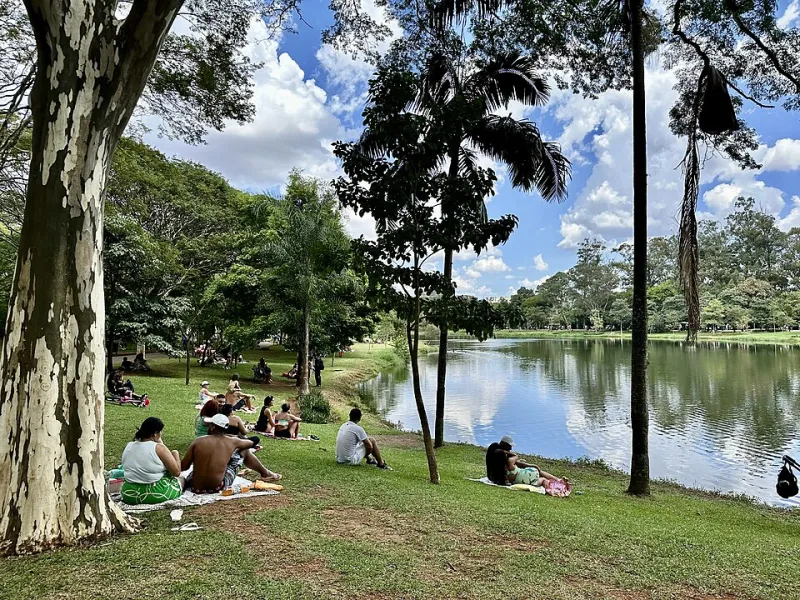
Photo: Slyronit, CC BY-SA 4.0, via Wikimedia Commons
There is a moment at every Dorset festival when the site goes slightly flat. The morning crowd has dispersed, the evening crowd hasn't arrived, the main stage is between acts, and the queue for chips is somehow longer than it was at one o'clock. It's usually somewhere between three and five. It is never on the poster.
I've come to think of it as the most honest hour of the weekend. Everything a festival actually is — rather than what it says it is — gets laid bare in that gap.
The hour with no headline
Festival programming tends to be built around peaks. Gates open, first act, big act, headliner, curfew. The trough between the afternoon and the evening isn't designed so much as left over, and organisers often treat it as a problem to be filled. Another DJ. A workshop in a tent. A parade nobody can find.
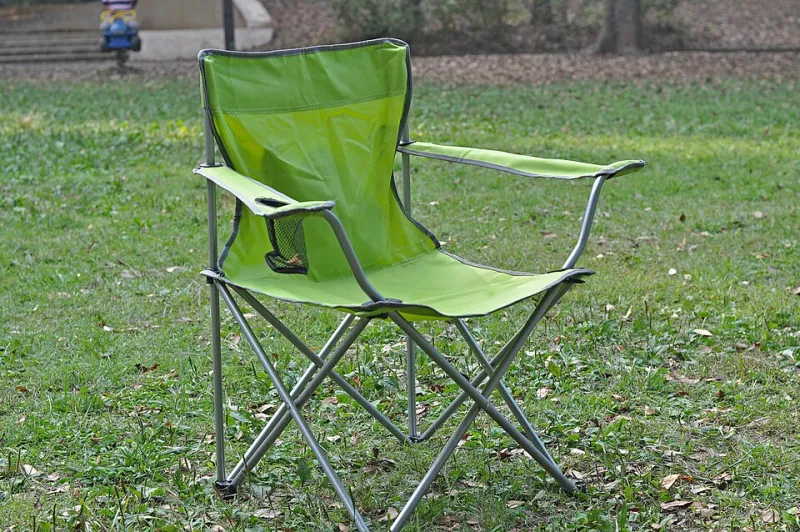
But a lull isn't automatically a failure. At a small festival in the Purbeck hills last summer, the quietest hour of the day was also the one where the site felt most like itself: children running a self-invented obstacle course around the hay bales, two men repairing a windbreak with gaffer tape, a woman reading a novel in a camping chair outside a tent she'd clearly had for twenty years. Nobody was being programmed. It was lovely.
Crowd energy is not a battery
There's a persistent belief that audiences need constant topping up or they'll drift away. In practice, the opposite is often true. People are not batteries; they are bodies that have been standing on grass since Friday with too little water and too much cider. A quiet hour lets them reset. Fill it with noise and you get a crowd that's exhausted by nine, watching the headliner through a fog of their own fatigue.
The lull is a recovery period. Treat it as a design feature and the evening gets better.
Families are the canary
Watch a family at half three and you learn more about a festival than any feedback form will tell you. Are there shaded places to sit? Is there anything for a seven-year-old to do that doesn't involve a queue? Can you get a cup of tea without standing behind forty people ordering flat whites?
If the answer to those is no, the family leaves — and they leave before the evening, taking their spending with them. A festival that handles the mid-afternoon well keeps a whole section of its audience on site and in a good mood. That's not sentimentality. It's the economics of a weekend.
The queue maths nobody models
Four o'clock is when food demand spikes, because everyone who skipped lunch is now hungry and everyone who ate at one is somehow hungry again. It's also when the traders themselves are changing shift, restocking and running low on the thing everyone wants.
Simple fixes exist, and they're cheaper than a headline act: stagger trader opening times so the pizza van starts an hour after the falafel stand; add a second water point; put the ice cream cart where the shade is. None of that makes a poster. All of it makes a better Saturday.
Shade is programming
If I could change one thing about how festivals think about the mid-afternoon, it would be this: shade is content. A field with three marquees, a few parasols and a treeline will hold a crowd through the hottest part of the day with no performance at all. A baking, shadeless site empties.
In a county that gets genuine heat in June and July, and then genuine rain the following week, shelter is infrastructure, not decoration.
Don't fill it — shape it
So what should organisers do? Not necessarily book another act. Shaping the hour is about timing, not volume. Move the children's workshop to four instead of eleven. Put the acoustic thing under the trees. Open the food traders in waves. Announce the evening's timings clearly so people can plan a sit-down rather than drifting anxiously between stages wondering what they're missing.
And please, resist the urge to schedule a headline-worthy act at 3.45pm purely to plug a gap. If the biggest name of the weekend is on in the afternoon, the evening will feel like a come-down, and all you've done is move the trough later.
What to do with your own four o'clock
The advice for the rest of us is simpler. Eat before you're hungry. Refill the water bottle you've been ignoring. Sit down somewhere with shade, even if it's a wall. Find the band you've never heard of on the smallest stage — this is reliably the best hour for that, because everyone else is in a queue. Text the people you've lost since Friday morning.
Then, when the evening comes, you'll actually have the energy for it.
A quiet hour is not a gap in the day. It's the bit that makes the loud bits possible.