Pitch Like You Mean It: Reading a Dorset Camping Field Before You Unload the Car

Photo: Dystopiamatt, CC BY-SA 4.0, via Wikimedia Commons
You've queued at the gate, been waved down a track by someone in a hi-vis tabard, and now you're standing at the mouth of the camping field with a tent bag cutting into your shoulder. Everyone around you does the same thing: walks twenty metres, looks at the grass, and drops. It's understandable. It is, almost always, a decision you will feel at 3am and again at 7am — and not in a good way.
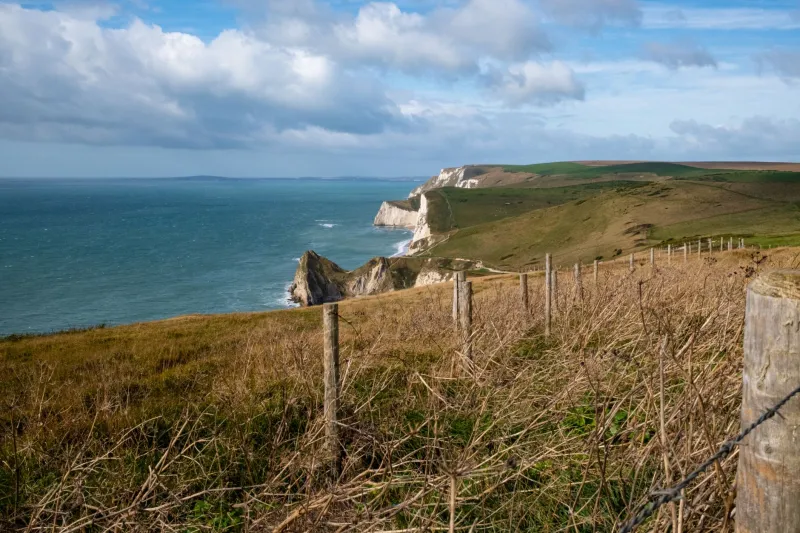
Dorset camping fields are not car parks with grass on them. They're working pasture, old water meadows and chalk downland, and each one has opinions. Fifteen minutes of reading before you unload the car is the best investment of the weekend.
The first flat patch is a trap
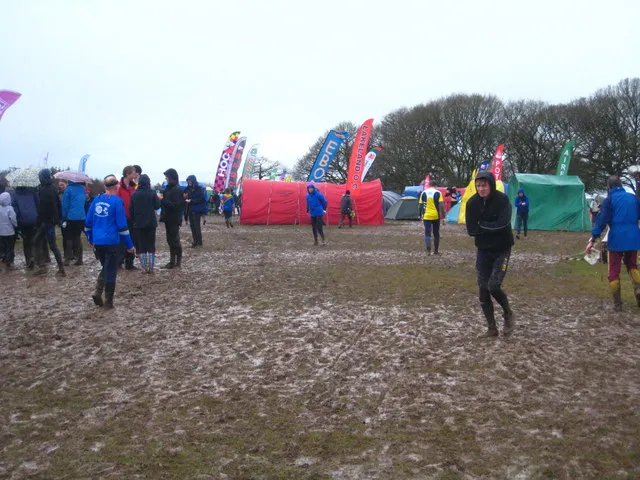
Anything within sight of the gate gets the most traffic: trolley wheels, wellies, the 2am conversation of people still trying to find their tent. It also gets the mud first, because every route in and out funnels over it. The patch you spotted from the queue looks level and convenient. Convenient is the problem — everyone else thought so too, and half of them will walk across your guy ropes on the way back from the bar.
Walk another two or three minutes. The field will thin out, and you'll start being able to see things.
Gradient: the two degrees you'll feel at 3am
A field that looks flat rarely is. Put your bag down and lie on the ground if you can — your inner ear is a better spirit level than your eyes. Sleeping on a slope means you spend the night slowly sliding into the downhill wall of the tent, and your sleeping mat will not save you. Pitch with your head uphill, even by a foot or two.
Beware the shallow dip as well. Cold air pools in hollows, and on a clear June night in a Dorset valley that means dew, then damp, then a sleeping bag that smells of wet grass by Sunday. The frost hollows of a downland field can be a good five degrees colder than the ridge.
Water: look uphill of where you sleep
Drainage tells you everything. Rushes in a field mean wet ground, full stop. So does dark green, tufty grass, and tractor ruts that have been there since spring. If you can see a track running down toward your spot, water will find that route too.
Chalk downland drains fast but sheds water quickly — a pitch on a slope above a hedge is usually safer than a flat-looking corner at the bottom of the field. Clay holds on longer. If it rained heavily in the week before you arrive, the lowest point of the field will still be soft no matter how good the forecast is for the weekend itself.
Morning shade and the 7am oven
In late June, sunrise on the Dorset coast is around 5am, and a tent with no shade becomes a greenhouse by half seven. If you're camping with small children — or you simply value a lie-in — look for a hedge or treeline to the east. Even a scrappy windbreak buys you an hour, and an hour matters at a festival.
Conversely, if you're up early anyway and want the tent dry by nine, an unshaded pitch will do it for you.
Noise drift and the invisible map
Sound doesn't stop at the edge of a field. It follows wind and terrain, so the quiet camping zone can turn out to be directly downwind of the late-night bar. Ask which way the prevailing wind blows — usually south-westerly in this part of the county — and position yourself upwind of anything with a bass bin.
Also clock the generator compound, the shower block and the road. A hedge between you and a B-road is worth more than a hedge between you and nothing at all.
Exit routes and the 6am shuffle
You probably won't leave early. But know where the fire lanes are, keep them clear, and never pitch across a gate — stewards will ask you to move, and they're right to. Check where the nearest water point is and whether there's a second one on the far side of the field; the closer one will be queue-central by Saturday morning.
If you might need to drive out at an unsociable hour, ask a steward which route stays open and where the car is actually parked. Some sites have a separate early-departure lane, and knowing about it in advance saves a very awkward conversation at dawn.
What the camping zones usually mean
Labels vary between festivals, but the pattern is fairly consistent. Family zones sit away from the late bar and tend to fill by Friday lunchtime. Quiet zones are the first to go and are only as quiet as the people in them. Live-in vehicle fields are usually the flattest ground on site, which is why they were chosen. Accessible camping is generally closest to the arena and often on firmer standing — worth asking about directly if you need it, rather than assuming it's booked out.
And remember that "family" is a description, not an enforcement policy.
Five questions for a steward
Ask these before you unload, not after:
- Where did the water sit after the last wet spell?
- Which side does the sun come up on?
- Where's the late bar, and which way does the sound carry?
- Where are the water points, and where's the fire lane?
- Is the ground firmer on the far side of the field?
Stewards are usually volunteers who have walked the field all morning and will happily tell you the truth. Take the answer, walk the extra two minutes, and pitch once.
A good pitch costs you a quarter of an hour. A bad one costs you the weekend's sleep.