Clouds Don’t Cancel the Weekend: Reading a Dorset Festival’s Wet-Weather Plan Before You Book
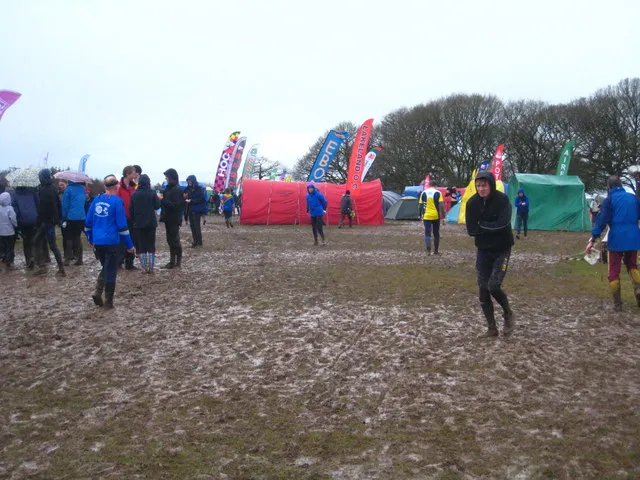
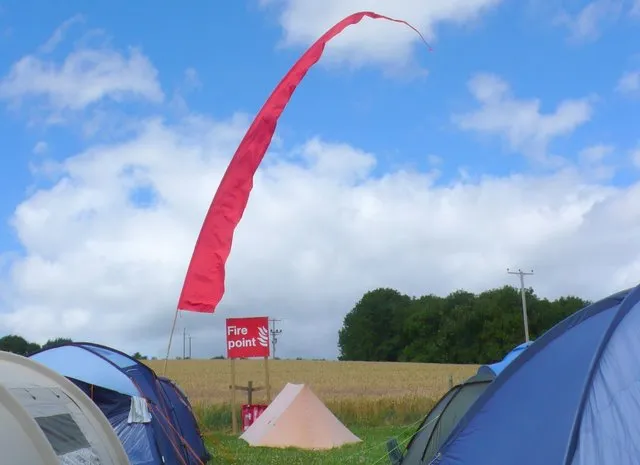
Photo: Rod Allday, CC BY-SA 2.0, via Wikimedia Commons
Dorset in the rain is not automatically a disaster. A bit of drizzle on the Jurassic Coast can be atmospheric; a proper downpour in a clay-heavy field near Wareham is another matter entirely. The difference between a weekend that quietly works and one that turns into a trudge usually comes down to preparation — not just yours, but the festival’s. So before you book, it’s worth looking past the line-up poster and asking a very unglamorous question: what does this event actually do when the forecast turns?
Start With the Small Print, Not the Sky
Most festival websites are happy to tell you about the headline act. Fewer are keen to explain what happens if the main stage has to be moved, the car park turns into a swamp, or the site has to close a gate for safety. That information is usually there, but it hides in FAQs, terms and conditions, or a single paragraph under “travel”. Look for it before you buy.
A good wet-weather plan is not a promise that nothing will change. It is a clear statement of what the organisers will do when things do. Does the site have hard standing or trackway? Are there covered areas beyond the beer tent? Is there a written policy on gate closures and re-entry? If the answer is “we’ll post updates on social media”, that’s not a plan — that’s a hope with a hashtag.
What Organisers Can Actually Control
Festival organisers cannot stop the rain. They cannot magic away a flooded lane, persuade a farmer to open a saturated field, or guarantee that every stage will run to time. What they can control is how quickly they communicate, how sensibly the site is laid out, and whether their refund policy is written in plain English.
The best Dorset events tend to be honest about this division. They will tell you which car parks are most weather-proof, where the mud is likely to gather, and whether the site is suitable for pushchairs and wheelchairs after a wet spell. They will also be clear about what happens if the event is cancelled outright versus merely rearranged. Those are different things, and the ticket terms should say so.
The Gate Call: Mud, Tracks and the Dreaded Closure
In a wet year, the most important person at a Dorset festival is often not the sound engineer but the person deciding whether to open the gate. A field that looks fine on Friday morning can be unusable by Saturday lunchtime once a few hundred cars have churned it up. That is why some events close gates temporarily, redirect traffic to a nearby hard-standing area, or ask ticket-holders to arrive later than planned.
This is not usually a conspiracy to ruin your weekend. It is a attempt to avoid a farmer’s field becoming a rescue operation. If a festival publishes a wet-weather traffic plan — even a basic one — treat it as a good sign. If it says nothing at all, prepare for the possibility that you may be sitting in a queue on a narrow Dorset lane while someone in a high-vis jacket works out what to do.
Stages, Schedules and the Art of the Shuffle
Moving a stage is not as simple as picking up a amp and shifting it under a tree. There are power supplies, lighting rigs, safety barriers and performers’ schedules to consider. Some festivals have a covered backup stage; many smaller ones do not. What they can often do is shuffle acts between indoor tents, shorten sets, or move the programme earlier to avoid the worst of the weather.
For ticket-holders, the practical lesson is to check the festival’s update channels on the morning of the event, not just the night before. A schedule that was accurate on Thursday may be different by Saturday at 10am. If the event has a printed programme, keep it, but treat the official social feed or website as the live version. In Dorset, where weather can roll in off the coast with surprising speed, that flexibility matters.
Refunds, Rollovers and the Honest Middle Ground
This is where the mood can sour quickly. A festival that cancels entirely should have a clear refund policy, but “cancelled” can mean different things. If the site opens but the main stage is closed, is that a cancellation? If the event is shortened by a day, do you get a partial refund? The terms should answer those questions before you buy, not after you have spent an hour in a traffic jam near Bridport.
Some festivals offer a rollover ticket to the following year, which can be a fair compromise if the event is small and the costs are already sunk. Others will point to their terms and conditions and offer nothing. Neither approach is illegal, but they tell you something about how the organisers see their audience. Read the refund clause with the same attention you give the line-up.
Reading the Forecast Like a Local
A generic weather app will tell you there is a 70% chance of rain in Dorset. It will not tell you that the festival car park is on a slope, that the main arena is on sandy soil, or that the wind coming off the sea will make a lightweight poncho about as useful as a paper hat. Local knowledge helps.
Look at the festival’s location on a map. Is it in a valley? Near a river? On clay? Those details matter more than a single rain icon. Check whether the event has previously posted wet-weather updates — older posts are a useful record. And if you know anyone who has been before, ask them the unglamorous questions: where did the mud gather, did the car park hold up, and was there anywhere dry to sit?
What to Pack for a Dorset Washout
You do not need expedition kit for a weekend in a Dorset field, but a few basics make a wet forecast far less miserable. Waterproof boots with actual tread beat fashion trainers every time. A decent rain jacket is worth more than an umbrella, which will either invert in the wind or poke someone in the eye during a set. Pack a dry bag for your phone and spare socks — not one pair, several.
If you are camping, check whether the site has a covered communal area and whether the ground is likely to flood. A cheap groundsheet and a bin bag for muddy boots can save your tent from becoming a swamp. And keep a change of clothes in the car, sealed and dry. That small act of forward planning feels ridiculous on a sunny Friday and heroic by Sunday morning.
The Weekend Is Still There
A rain-hit Dorset festival is rarely the disaster the forecast suggests. It is often smaller, stranger and more memorable — a crowd huddled under a tarpaulin, a band playing to forty soaked people who are determined to enjoy themselves, a food stall doing a roaring trade in hot tea. The trick is to book with your eyes open, read the wet-weather plan before you pay, and accept that the weekend may look different from the poster.
If the organisers are clear, calm and organised, a bit of rain is just weather. If they are vague, defensive and silent, that tells you something too. In Dorset, the sky can change its mind quickly. The best festivals plan for that — and the best weekends usually start with a sensible look at the small print.