When the Steward Zips Their Coat: Reading Dorset Festival Weather Without a Signal
There's a moment at every Dorset festival when the group chat goes quiet and everyone looks up. Not at the stage — at the sky over the ridge, the one going the colour of a bruise. Your phone says 12% battery and one bar of signal, which is roughly the same as saying nothing at all. This is where local wisdom earns its keep.
Nobody is suggesting you bin the forecast app. But after a few weekends in a field outside Wareham or on the slope above Bridport, you start to notice that the people who look least surprised by the weather are rarely the ones staring at a screen. They're the ones sniffing the air and muttering about the wind backing.
The cloud that looks like a duvet, not a sheep
A sky full of small, high, rippled cloud — the mackerel sky that turns up over the Purbeck hills on a Friday afternoon — is the classic 'get your waterproofs out of the car' signal. It doesn't guarantee a soaking, but it does mean the atmosphere is unsettled and the next twelve hours are worth respecting.
What locals look for instead of 'rain' is texture. Flat, grey, featureless cloud that sits low over the Jurassic Coast and doesn't move is the worst kind — it tends to mean a slow, dribbling drizzle that makes the ground greasy rather than dramatic. Big, towering white cauliflower clouds building by mid-morning usually mean a sharp shower around three, then a bright evening. Sharp showers are fine. It's the ones that never stop that ruin a Sunday.
One steward at a small festival near Cerne Abbas put it neatly: 'If the cloud has edges, we're alright. If it hasn't, I'm putting the signs out.'
Wind that backs, sea fret that creeps
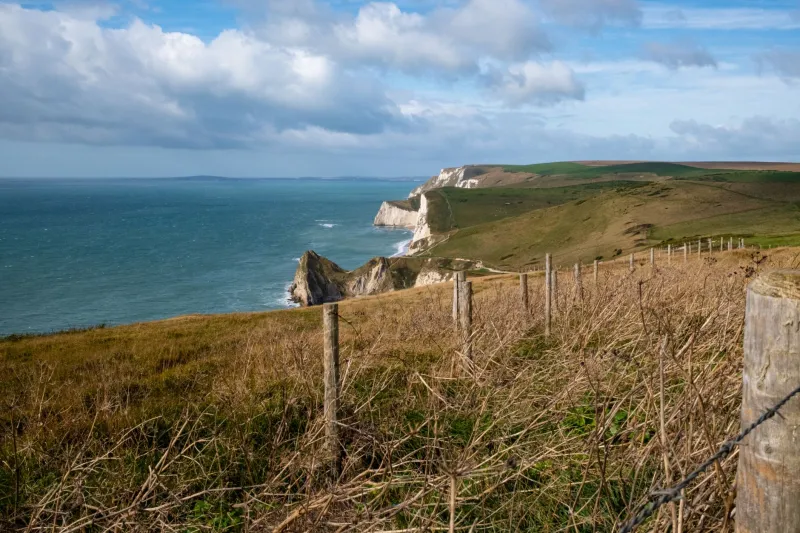
On the coast, wind direction does more to shape a weekend than any rain forecast. A breeze swinging round to come off the sea — south-westerly on most of the Dorset coast — brings damp air, a drop in temperature and, in early summer, the sea fret that swallows Swanage and Burton Bradstock without warning. You can be standing in warm sunshine at one end of a field and watch the far side disappear into grey mush.
The tell is the smell. That cold, salty, slightly metallic tang on the wind means the fret is coming. So does the sudden arrival of gulls drifting inland, and the way the light goes soft and flat before the mist actually reaches you.
Inland, around Blandford or Wimborne, the wind is more honest — it either blows or it doesn't. But a wind that 'backs' (shifts anticlockwise, so from west round to south-west and then south) is a warning sign that a weather front is nudging in. Old farming types will tell you it means rain within the day. They're right more often than a five-day forecast with a spinning icon.
Livestock: useful, but overrated
Yes, cows lie down before rain. Also, cows lie down because they're tired, because it's warm, or because they've decided that particular patch of grass is superior. Any dairy farmer in the Blackmore Vale will roll their eyes at the very idea. Don't build your Saturday around it.
More reliable is movement. Sheep heading for the hedgerow line and turning their backs to the wind are reading something real. Cattle bunching tighter than usual in an open field tend to know a squall is coming. And if the swallows are flying low, the insects are low, and the rain is probably not far off either — that one at least has the virtue of being true.
The steward coat index
Far and away the most accurate instrument on any Dorset festival site is the staff clothing scale. It runs roughly like this:
- Fleece on, hood down — fine for hours yet.
- Fleece on, hood up — drizzle inside the hour.
- Waterproof on but open — fifty-fifty, they're hedging.
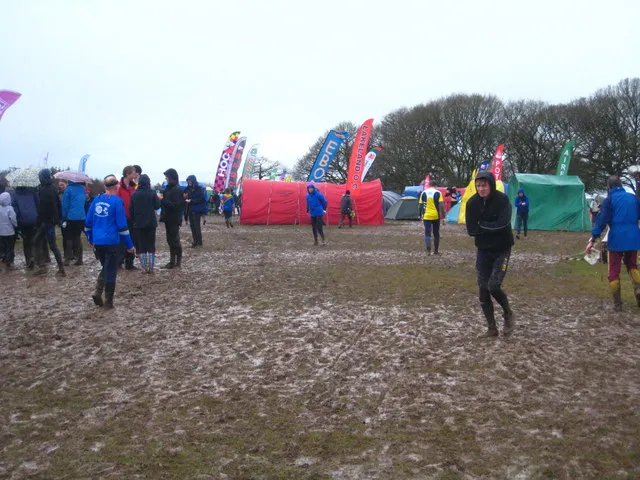
- Waterproof zipped, hood up, gloves — go back to the tent and get your bag cover.
- Steward standing under the gazebo with a mug — genuinely grim, and they've stopped pretending otherwise.
Learn to read this and you'll never be caught out on the far side of the arena with your only jumper left in the car.
A word about the sunburned optimist
Every field has one. He's pink from the neck up, three pints into the afternoon, and he is absolutely certain it's going to 'blow over'. He is not a meteorologist. He is a man having a lovely time who will be shivering in a t-shirt by nine o'clock and asking to borrow your coat.
Treat any weather opinion delivered while holding a pint and squinting at the horizon with polite scepticism. The same goes for the person insisting 'it never rains at this festival'. It does. It has. It will.
How to plan a 2026 weekend that respects both
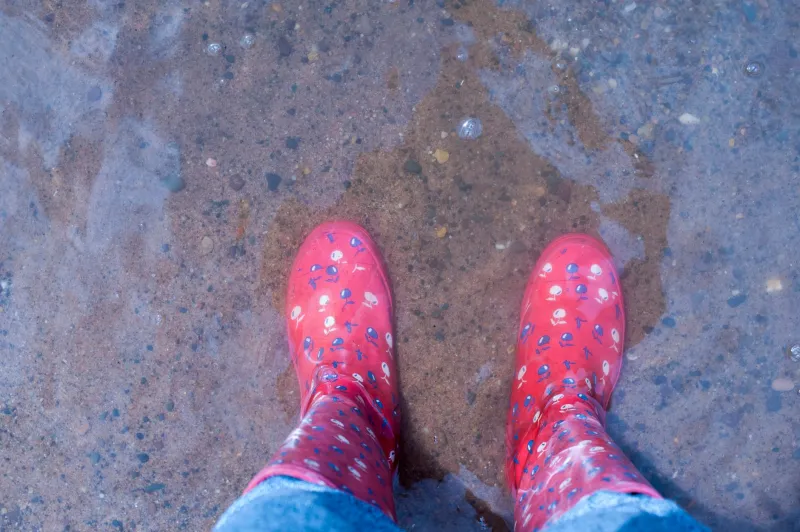
Check the Met Office the morning you leave, then mostly forget it. Pack for two seasons — a warm layer and a proper waterproof, always, even in July. Bring boots you've already broken in, because a wet Dorset field is not the place to discover a blister. Keep a dry bag for your phone and a spare pair of socks in the car. And when a local tells you the fret is coming in, believe them.
The sky over a Dorset festival field is not a mystery. It's just speaking a language that doesn't need a charging cable. Look up, watch the stewards, and trust the wind. The app can have the last word — but the field usually gets there first.