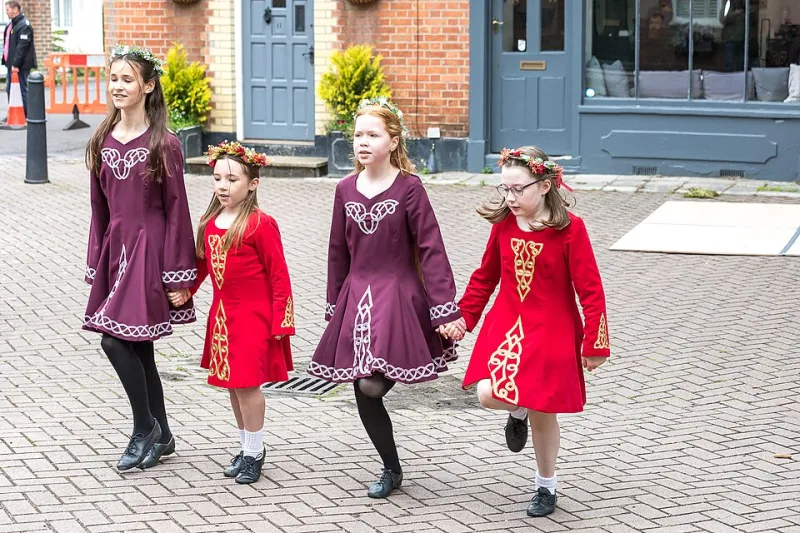
The Best Night Out in Dorset Has Forty People in It
Photo: Ronald Sarayudej, CC BY 2.0, via Wikimedia Commons
I want to make an argument that will annoy the people who run the big events: the best festival night in Dorset this winter will probably hold fewer than eighty people, take cash at the door, and finish before the last bus.
Not because big festivals are bad. Because they are doing a different job, and we've stopped noticing the difference.
Do the maths on a wristband
A weekend ticket to a mid-sized music festival now runs to something like £150–£200 before you've parked. Add £7 a pint, £12 for a portion of something fried, and a camping setup that costs more than a weekend in a cottage. You'll see perhaps six acts properly, hear three more from the queue for the toilets, and spend a fair chunk of Saturday trying to find your friends in a field with no signal.
Now price up a folk night in a village hall outside Bridport. Ten pounds on the door. Soup and a roll for four. A raffle. Three acts, one of them local, one of them somebody's niece who turns out to be extraordinary. You are close enough to see the set list taped to the floor.
It is not that one is morally superior. It's that at the small end, almost every pound you spend goes to a person rather than an infrastructure.
What intimacy actually buys you
Small events do things the big ones structurally cannot:
- A second set. Artists at tiny gigs often play again afterwards, unplugged, in the corner, because there's nowhere else to be.
- A conversation with the person who made your food. Not a brand, a person, standing next to the urn.
- No clash chart. There's one room. You see everything. The anxiety of choosing disappears.
- An ending. Village halls tend to shut at eleven. You are home, warm and awake, rather than queuing for a car park at one in the morning.
- Permission to be bad at it. Nobody at a churchyard poetry reading is filming the audience.
Three organisers on why they bother
Hilary runs a monthly folk night in a hall a few miles outside Bridport. "We get between forty and seventy," she says. "The hall costs us eighty quid, the performers get the door after that, and we sell soup. Nobody's getting rich. But people come early now, because they know each other, and that's the whole point — the music is the excuse."
Tessa organises poetry readings in a churchyard near Sherborne each summer and indoors through the winter. "We had thirty-one people in October. Twenty of them stayed for tea. I've been to readings in cities where two hundred people sit in silence and leave immediately. I know which one I'd rather run."
And Rob, who has spent four years building a farm-gate food fair on the Blackmore Vale, is blunt about the economics. "We're not a festival. We're twelve producers, a gazebo and a car park in a field. But every pound spent goes to someone within ten miles, and that's why the parish council keeps saying yes."
The catch — and it's a real one
Small is fragile. A forty-person event has no buffer. If the boiler fails, the night is cancelled, and the organiser is out of pocket. Volunteers burn out. Insurance and hall hire have both crept up. Publicity is a photocopied poster in the post office window.
So the deal is mutual: they give you something intimate, and you turn up, buy a ticket in advance even when it's free, buy something at the bar, and don't ask for a refund when the weather turns.
Also, bring cash. Lots of these nights still have no card reader, and the ones that do would rather you didn't.
How to actually find them
This is the honest reason most people don't go: they never hear about them.
- Parish magazines. Free, monthly, and full of listings that appear nowhere online.
- Village hall and church noticeboards. Still the primary distribution network for rural Dorset.
- The shop window. Village stores and post offices carry posters for things that have no website.
- Mailing lists. Ask to be added. A monthly email from a hall committee is more reliable than any listings site.
- Follow the venue, not the festival. Arts centres in Bridport, Dorchester and Sherborne programme small touring work all year; the interesting stuff is usually the midweek slot.
- Ask in the pub. Genuinely. "Anything on this weekend?" is the most effective search engine in the county.
A weekend built on three tiny things
Here's what it looks like in practice, and what it costs.
Friday, 7.30pm. Folk night in a hall near Beaminster. Doors half an hour before, £10, soup £4, raffle £1 a strip. Two sets and a floor spot. Out by 11.
Saturday, 4pm. Poetry reading in a churchyard near Sherborne — daylight, hats, a flask. Free, donation bucket, roughly forty minutes. Then the pub next door for an hour because everyone else does the same.
Sunday, 10am to 2pm. Farm-gate food fair on the Blackmore Vale. Twelve producers, a bacon roll, a bag of apples, a chat with a cheesemaker. Spend twenty quid, then walk it off on a footpath you've never noticed before.
Total: somewhere in the region of £40, plus fuel and a pint. For a whole weekend. And the money stayed in the county.
The verdict
Go to the big ones — a summer field with a band you love is a genuinely good thing, and Dorset needs its flagship weekends. But leave room in the calendar. The night where you can hear the instruments unamplified, where the person next to you is a neighbour rather than a stranger, and where you're home before midnight, is the one you'll still be talking about in March.